How to Recover from a painful breakup | Complete guide
Breakups are tough and we wouldn't want anyone to experience the heartache of a breakup but it is a common occurrence in life. You will have a breakup unless you stay with the first person you ever have a romantic relationship with, regardless of whether it was your decision, your partner's, or a consensual break.
This may cause discomfort, confusion, disorientation, and interference with day-to-day activities. Breakups indicate loss in different ways, ranging from the loss of a trustworthy companion to the loss of relationships and possibly even financial stability.
It frequently feels lonely and can be extremely uncomfortable. Every breakup is different, even if there are many similarities in what people go through. This breakup recovery guide shares practical steps to help you heal, regain clarity, and move forward with strength.
1. Choose Good People for Support
First things first: Don't suppress your emotions or go through a split by yourself. It's acceptable to become fixated on something for a few days, but don't allow it to control your life over time. Right now, it's crucial to identify a few critical individuals with whom you can discuss it and spend time with for emotional support in any ways you need.
Even if you're embarrassed to bring a bleeding heart outside, process the breakup with people you can trust and spend time doing activities that make you happy and comfortable. Regardless of how ridiculous your ideas may appear at the moment, it's beneficial to simply express them rather than spending a Friday night at home after a breakup.
Even if you don't feel like it, leave the house. Attend a party, take your buddies to swing dance classes, play a game, eat dinner together or just engage in positive conversations. To be honest, time has been the best medication; these are just a few of the things that could be greatly helpful.
2. Understand the Cycle of a Breakup
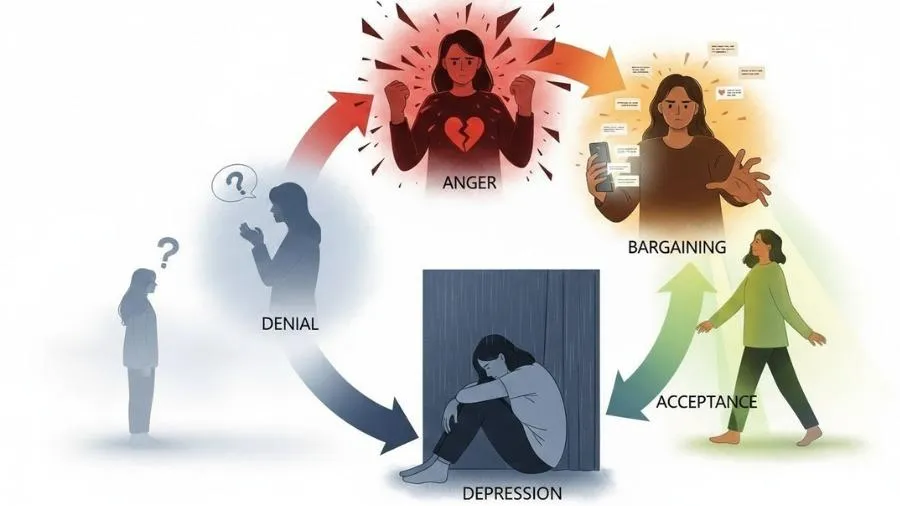
After a breakup, expecting change and preparing for it can ease the emotional stress and sadness that follow major life shifts. Avoiding contact or reminders, like social media and old photos can make healing easier and prevent prolonging the pain.
Elisabeth Kübler-Ross, a psychiatrist, created a model called The Kübler-Ross model that predicts the feelings people experience when faced with unexpected loss. It is typically used to help people deal with grief following the death of a loved one, but it may also be applied to breakups. Understanding the emotional cycle helps you realize your reactions are normal and that your thoughts and behaviors will change over time. The actions are as follows:
* Denial
The initial phase can cause confusion as you find it difficult to acknowledge that the breakup has truly occurred; it will take some time to become comfortable and seem like reality.
* Anger
After you come to terms with the fact that your relationship is over, you can be upset with your ex-partner for causing you this, or you might be upset with yourself or the circumstances in general, but avoid dwelling on it for too long.
* Bargaining
We've all heard the phrase "never text the ex," and it's crucial right now. This is the time when you'll be willing to "change" and compromise on yourself in order to get back together. It's powerful to know this ahead of time since you have to fight the urge. Please don't try to change yourself unless you did anything wrong, as most reconciliations end in divorce.
* Depression
It is the state in which you mourn the relationship and come to terms with the fact that you won't be getting back together. You must resist the urge to eat junk food and do nothing.
* Acceptance
Well, let's move on. Give yourself time to properly understand that you are no longer a thing, don't escape it by going with anybody else straight away. You will find closure and acceptance if you let the cycle continue.
Being aware of the cycle has great power. Since everyone processes emotion differently, some people may be able to process it more quickly than others. Since each person is unique, there is no predetermined time. Giving yourself time and space is essential to your healing
3. Meditation
It's common to feel a wide range of emotions and to feel more stressed following a breakup because of the background noise of your grieving. Here is what you need to do: calm yourself, concentrate on your breathing, and picture your former lover standing in a room.
Go over to give them one more hug while sobbing uncontrollably through closed eyes. After that, picture them gradually getting smaller and smaller until they disappear.
It might take you several sessions and many tears to finally let go, but it will be a very healthy method to release pent-up feelings. If you're new to meditation, there are a ton of online lessons available.
4. Prioritize Personal Growth: Exercise & Eat Well

This is the most crucial advice to go along with meditation. Your food and exercise habits have a big impact on your emotions. Make yourself eat a healthy diet and get some exercise, even though you won't feel like it at the moment.
Reduce the amount of meat in your diet and eliminate processed foods and refined sugars. Eat a lot of fresh produce, nuts, and fruit, and take a daily run or swim. Make sure you stick with it and don't slack off.
5. Focus on Yourself
Setting goals for how you want to improve and grow will be incredibly helpful to you after a breakup. Thinking about what I want to become rather than how I wasn't good enough is so much healthier. You will frequently have more time to devote to self-care after a breakup because you have more time to yourself.
This may be a fantastic opportunity to try out that dance class you've been considering, take up a new activity, discover a new area of interest, or travel alone to that charming town you've been admiring for months. Focus your attention on enjoying and discovering who you are. That has both joy and power.
6. Therapy
If doing all this on your own seems too much than try seeking out a therapist. A therapist can assist you in recognizing and communicating your emotions, comprehending your relationship and its demise, recognizing both beneficial and harmful relational behaviors, gaining clarity on the relationship's termination, and more clearly defining your needs and desires for future relationships. Don't be afraid to ask for assistance and support; you deserve it.
7. Lastly, Remember That You are Not Alone
You're truly not alone, even though it might seem that way. Many people are currently going through this process, which will make you stronger. Everybody processes information differently, and the emotional cycle is entirely natural. Because crying and feeling depressed are normal and healthy reactions, don't let anyone tell you otherwise.
This breakup survival guide is meant to remind you that healing is possible, and that every ending is also a beginning. We assure you that you will be alright.
FAQs
1. How to recover from breakup depression?
It is the state in which you mourn the relationship and come to terms with the fact that you won't be getting back together. Rebuilding routine, grieving the loss, and practicing active self-care are all necessary for recovery from breakup depression. Put your physical well-being first by getting enough sleep, exercising, and eating a healthy diet.
2. What are the 5 stages after a breakup?
According to the Kübler-Ross model of mourning, the five phases of a breakup are denial, anger, bargaining, depression, and acceptance. However, these stages aren't usually sequential, and people may go through them more than once.
3. How to accept a relationship is over?
Give yourself time to properly understand that you are no longer a thing, don't escape it by going with anybody else straight away. From shock and disbelief (denial) to finding peace (acceptance), these phases aid in normalizing the emotional healing process. You will find closure and acceptance if you let the cycle continue.
4. How to recover from a breakup quickly?
Enforcing strong "no contact" rules to prevent emotional re-triggering, eliminating tangible reminders of the ex-partner to avoid lingering thoughts, and practicing self-care, such as exercise, to alter brain chemistry are all important components of a speedy recovery following a breakup.
Related Topics:

Healthy Boundaries, Healthy Love
Gain the confidence to set emotional and physical boundaries without guilt and without second-guessing yourself.
Strengthen Confidence and Boundaries
Confidence isn’t pretending to be unbothered. It’s knowing you can handle whatever comes.
You’ll learn:
Grounding and reflection techniques to stay centered through setbacks
How to maintain boundaries while staying emotionally open
Daily self-assurance habits that rebuild your sense of worth
You’ll emerge calm, secure, and open to love… without losing your balance or yourself.

You Can’t Rewrite the Past, But You Can Redesign What Happens Next.
You’ve faced the truth. Maybe you’ve had the confrontation.
Now comes the part no one talks about — the quiet aftermath.
The sleepless nights. The emotional rollercoaster. The question that keeps looping in your mind: “What now?”
The Betrayal Recovery Blueprint gives you that answer — a clear, compassionate 30-day roadmap to rebuild your peace of mind, your confidence, and your boundaries, no matter what you decide next.
Whether you choose to stay or walk away, this plan helps you heal fast, think clearly, and move forward with self-respect and power.
Because you can’t change what happened, but you can control what comes next.

Here’s What’s Inside
Daily Healing Prompts
rewire your self-worth, quiet the obsessive thoughts, and anchor into calm.



Trust Rebuilding or Exit Strategy Paths
two guided tracks for whatever ending you choose, both leading back to peace.

Emotional Armor Techniques
simple, powerful methods to protect your heart and make sure no one ever breaks you like this again.


Terms Of Use | Privacy Plicy | Blog
All rights reserved Naved Products 2025